

Stonemasonry is one of the oldest and most enduring crafts in the UK, shaping the nation’s architectural identity for thousands of years. From medieval cathedrals to dry-stone walls bordering hilly fields, the work of skilled stonemasons continues to define both historic buildings and contemporary garden design.
Rooted in British History
The origins of stonemasonry in the UK can be traced all the way back to the Neolithic period, making it one of the earliest known construction trades. Over centuries, the craft evolved alongside Britain’s architecture, playing a central role in the construction of castles, churches and bridges.
During the medieval period, stonemasons were highly skilled craftsmen organised into guilds, responsible for constructing the iconic cathedrals and monuments that still stand today. These structures were not only functional but symbolic, showcasing durability and skill.
The Role of Stonemasonry in Heritage Conservation
Today, much of a stonemason’s work lies in the conservation and restoration of historic buildings. Rather than new construction, most current projects focus on preserving listed structures using traditional materials and techniques. You may have even seen them working outside of a cathedral or castle recently. A trip to York a few years ago not only gave me the opportunity to explore the beautiful historic city, but a chance to watch stonemasons at work outside of York Minster.
The work involves carefully selecting stones, lime mortar pointing, and detailed repair work to ensure that anything new remains sympathetic to the original look. Skilled masons must balance heritage authenticity with modern standards, ensuring buildings remain structurally sound for future generations – a multi-layered and extremely skilled job!
Despite obvious advances in machinery and technology over the last couple of decades, many traditional skills such as stonemasonry remain unchanged. The ability to shape and fix stone by hand is still essential and can’t be replicated with machinery.
Bringing Stonemasonry into Garden Design
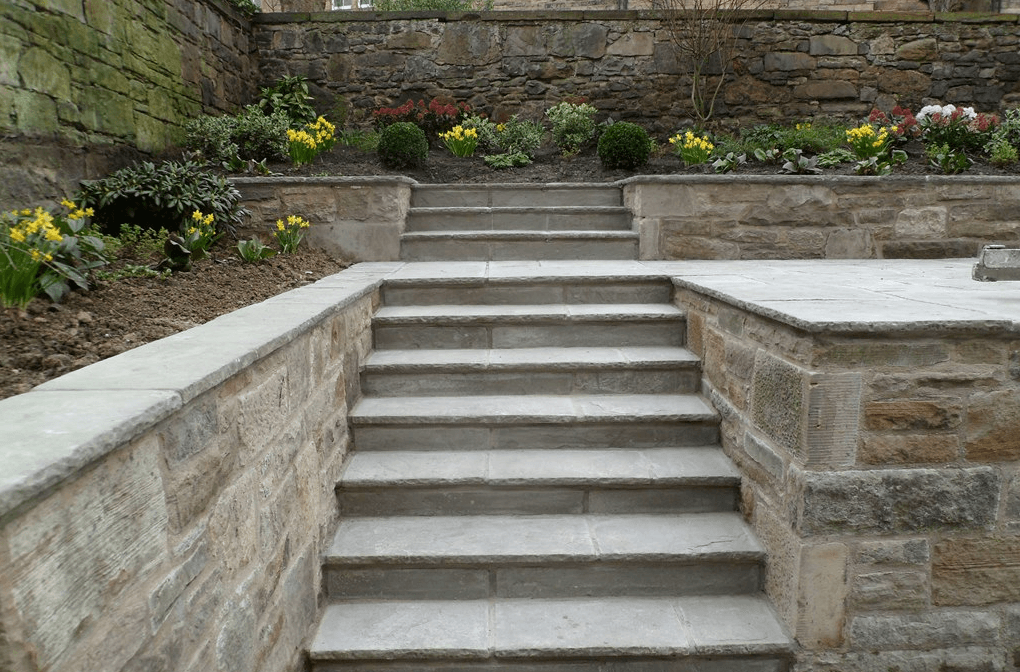
While deeply rooted in history, stonemasonry is increasingly being used in modern landscaping and garden design. Natural stone offers a timeless aesthetic, durability, and can create a strong connection to the surrounding environment.
Key applications in gardens include:
- Dry stone walling: A traditional technique that creates boundaries without use of any mortar, blending seamlessly into rural settings
- Stone paving and patios: Durable and weather-resistant surfaces that improve function and aesthetics
- Feature elements: Sculptural pieces, seating, steps, and water features that add character
- Retaining walls and terraces: Structural solutions
Natural stone is particularly valued. When sourced responsibly, it offers a low-maintenance and environmentally sympathetic option compared to manufactured materials.
Why Traditional Craftsmanship Still Matters
We’re currently in an era which is dominated by modern construction methods. But traditional stonemasonry offers something unique: authenticity. Each piece of stone is individually shaped, meaning no two elements are identical. This creates a sense of quality that is difficult to replicate with other materials.
Incorporating stone into garden spaces helps bridge the gap between built environments and nature. Whether echoing the materials of a nearby historic building or area (such as using Cotswold stone) or creating a new focal point, stonemasonry adds depth, texture, and heritage value to gardens.
If you’re ready to start your journey to a new garden, click here to arrange a relaxed, no-obligation conversation.
Take a look at our case studies for more garden design inspiration.