

Before working with us on a garden design project, most clients arrive with a similar set of concerns. It doesn’t matter whether they are redesigning a compact courtyard or transforming a large family garden, the questions tend to be the same.
Will the garden be difficult to maintain?
Will it feel too formal or too overly designed?
Will it actually suit how we live day to day?
Will it still work in five or ten years?
These worries are completely understandable. A garden is not a small investment, and it is also deeply personal. It is the space you see from your kitchen window each morning. It is where your children might play, where you host summer dinners, where you sit with a coffee on a quiet Sunday. It should feel right.
The reassuring part is this: these concerns are not obstacles. They are exactly why the design process exists.
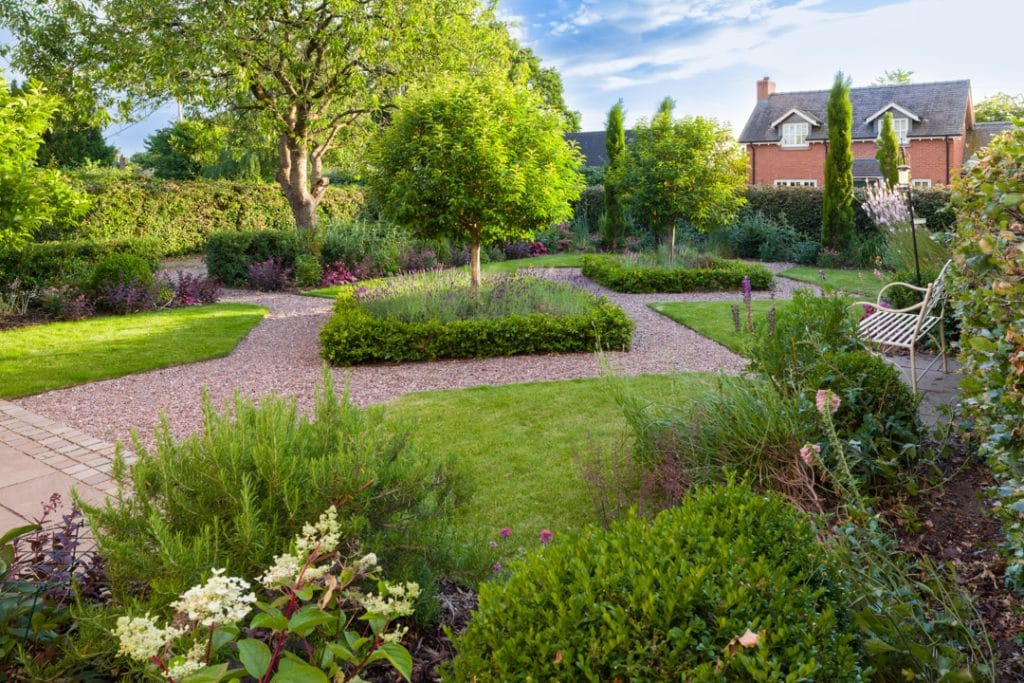
“Will it be difficult to maintain?”
This is often one of the first questions and we understand why. Many people have experienced a garden that felt like a never-ending task list. Borders that demanded constant attention, lawns that never quite behaved, plants that needed far more care than expected.
Maintenance is not one-size-fits-all. Some clients genuinely enjoy gardening and want to spend time pruning, planting and tending. Others prefer a space that looks beautiful without demanding their weekends. Neither approach is better. The key is honesty at the beginning.
During our process, we factor in follow-up maintenance visitors to ensure the start of your new gardens life can begin in the best way possible. As well as this, with a thoughtful plant selection and a considered layout, a garden can be tailored to the level of involvement you want.
“Will it feel too formal?”
Another common concern is that a designed garden might feel too pristine or overly designed. Clients sometimes worry that the end result will look like a show garden rather than a space to relax in.
Structure is important because it gives a garden clarity and flow. But within that structure there is always room for softness and personality. Informal planting, natural materials and carefully framed views can create a space that feels calm and welcoming rather than rigid.
In reality, most gardens benefit from a certain amount of order. It allows the more relaxed elements to shine. In every garden design project, the aim is not to create something that looks impressive in photographs but something that feels right when you are standing in it.
“Will it suit how we really live?”
This question is perhaps the most important of all. We’ve written a number of articles about how your garden should work for you as functionality is something we feel strongly about.
Every family uses their outdoor space differently. Some need generous lawns for kids football matches. Others prioritise dining areas for long evenings with friends. Some want quiet corners to read. Some want space for a dog to roam. Many want a combination.
A considered design process begins with listening. Not just to what you say you want, but your routines, where the light hits during the day, which door you use etc. A garden should work as an extension of the house.
When spaces are planned carefully, you find yourself naturally drawn outside because the layout makes sense.
“Will it be future-proof?”
Life changes – children will grow up, work changes, priorities evolve. It is sensible to wonder whether a garden will adapt to your everchanging lives. A big investment shouldn’t be for a garden you’ll outgrow in 18 months, but an ever-lasting space that adapts to you in every phase of life.
Future-proofing is not about predicting every detail of the next decade. It is about building flexibility into the design. Clear structure and quality materials create a framework that can evolve. A play space today might become a seating area later. Open lawn can transform into a space for a vegetable patch. Trees will mature and add character over time.
The bones of the garden matter. When they are strong, adjustments are easy.
It is also worth remembering that gardens themselves are living, changing environments. They grow, settle in and only become more beautiful with age.
Why the process matters
With questions comes uncertainty, but uncertainty disappears when there is a clear, collaborative process. One that explores how you live, what you value and how you want to feel in the space.
Trends can be inspiring, and pictures on Pinterest can spark ideas, but copying an image without context rarely leads to a satisfying result. Your garden should reflect you, your home and your surroundings.
By the time a garden design project is complete, those early worries tend to fade. The pre-design process questions replaced with just one – “why didn’t we do this sooner?”
If you have been hesitating because of similar concerns, a consultation is simply a conversation. It’s not a commitment. It is an opportunity to explore what is possible and to ask any questions you have to remove worries rather than create new ones.
If you’re ready to start your journey to a new garden, click here to arrange a relaxed, no-obligation conversation.
Take a look at our case studies for more garden design inspiration.