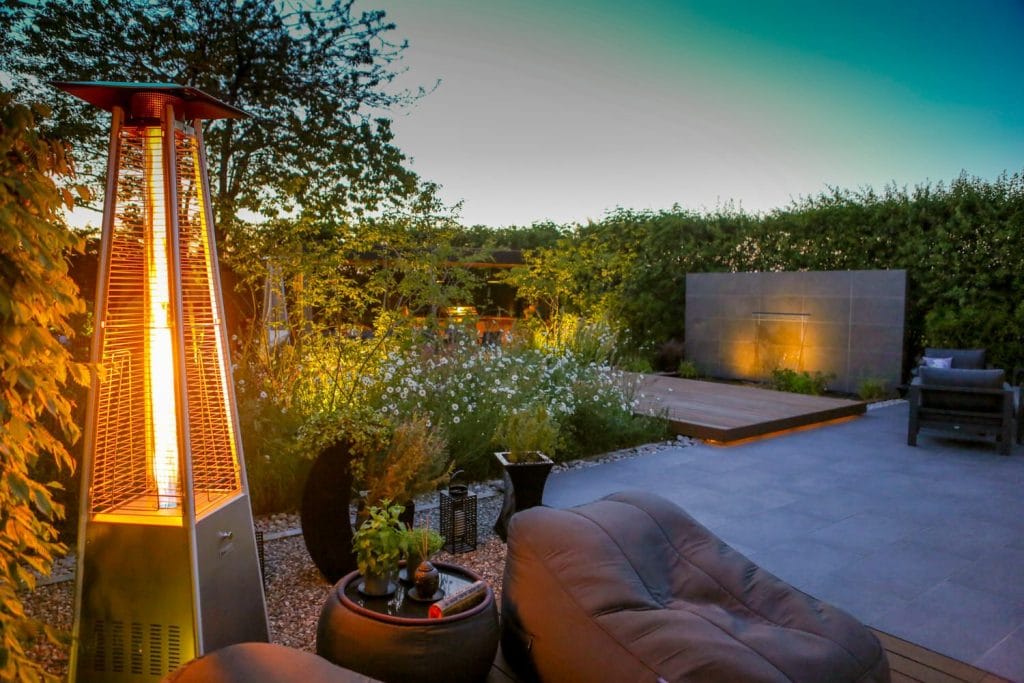
Garden lighting has become almost expected in modern outdoor spaces. Soft fairy lights, uplighters and motion-activated security lamps can make a garden feel welcoming, cosy and safe. But there’s a growing conversation in the UK about the unintended impact of artificial light at night on wildlife and ecosystems.
This isn’t just about sky-watchers wanting to see stars. Organisations like the Royal Horticultural Society, conservation groups and ecological professionals are increasingly pointing out that light pollution is more than an aesthetic or astronomical issue, it’s an environmental one.
What science says
Artificial light at night is not a recent phenomenon, but its scale has grown rapidly. According to the Institution of Lighting Professionals, artificial light exposure in the UK and beyond has risen by around 49 per cent over the last 30 years, and that growth has significant ecological implications.
Many species have evolved to make use of the natural cycle of light and dark. When that cycle is disrupted, even subtly, it can affect their behaviour, survival and reproduction. Nocturnal insects, for example, use moonlight and starlight to navigate. When confronted with artificial sources at close range, many become disorientated. In some areas, nocturnal pollinator visits to flowers have dropped by as much as 62 per cent where artificial light is present.
Insects form a crucial part of the food web. Buglife, a UK charity devoted to invertebrate conservation, notes that caterpillar populations have been measured at up to 52 per cent lower in areas with streetlights. That reduction doesn’t affect only moths but travels through the food chain.
Bats are particularly sensitive to light. Many species avoid lit areas altogether or delay emerging from roosts until the lights are off. That shortens their feeding windows and can force them into sub-optimal habitats. While some more ‘light-tolerant’ bats may risk feeding near streetlights because of insect concentrations, this behaviour increases their chances of coming across predators.
Garden birds are affected too. Even low levels of artificial light can extend their perceived day, encouraging earlier waking, later sleeping or nocturnal singing. Studies have shown that some birds in urban environments exposed to light pollution extend their active periods by an average of nearly an hour compared to those in darker areas. While the full long-term effects are still being studied, changes like these can influence breeding success and energy expenditure.
Dark sky lighting and biodiversity
The UK has a proud tradition of dark sky reserves and initiatives aimed at protecting night-time darkness not just for astronomy, but also for wildlife. Organisations like Dark Sky UK promote lighting that is appropriately shielded, directed downwards and limited to what’s necessary.
Their ideas ar straightforward:
- Use lower-intensity lights
- Choose warmer colour temperatures, which are less attractive to insects and less disruptive to nocturnal behaviour
- Position lights carefully so they don’t spill into neighbouring habitats
- Switch lights off when they are not needed
Simple adjustments like these can dramatically reduce the ecological impact of lighting without compromising safety or usability.
The garden as habitat
What’s particularly controversial about garden lighting is that gardens increasingly form part of wildlife habitat networks. In urban and suburban areas where larger wild spaces are fragmented or disappearing, gardens are vital refuges for hedgehogs, birds, bats and insects. Decisions we make about lighting in our own backyards matter because they influence how these networks function.
Conservationists encourage gardeners to think not just about how a garden looks at night, but how it works as an ecosystem. A garden with pockets of darkness can be just as beautiful and much more wildlife-friendly than one that’s brightly lit all evening.
How to balance light and biodiversity
It’s worth noting that small changes can make a big difference. Turning decorative lights off after a certain time, fitting hoods or shields, and experimenting with less intrusive lighting will usually benefit wildlife without leaving you feeling like you’ve lost your outdoor space after dark.
Knowing that light pollution can harm the wildlife we love to see in our gardens is not meant to discourage people from enjoying their outdoor spaces. Instead, it invites a more considered approach.
If you’re interested in lighting solutions for your garden or want to know steps to take within a new garden design, get in touch and we can help.
If you’re ready to start your journey to a new garden, click here to arrange a relaxed, no-obligation conversation.
Take a look at our case studies for more garden design inspiration.