Contemporary Cheshire Garden
A Contemporary Garden Shaped by Woodland Ecology
Set within established woodland in Cheshire, Oak Grange presented a rare opportunity: to create an ecology driven landscape that would sit comfortably alongside a striking contemporary home while respecting the woodland setting that gives the site its character.
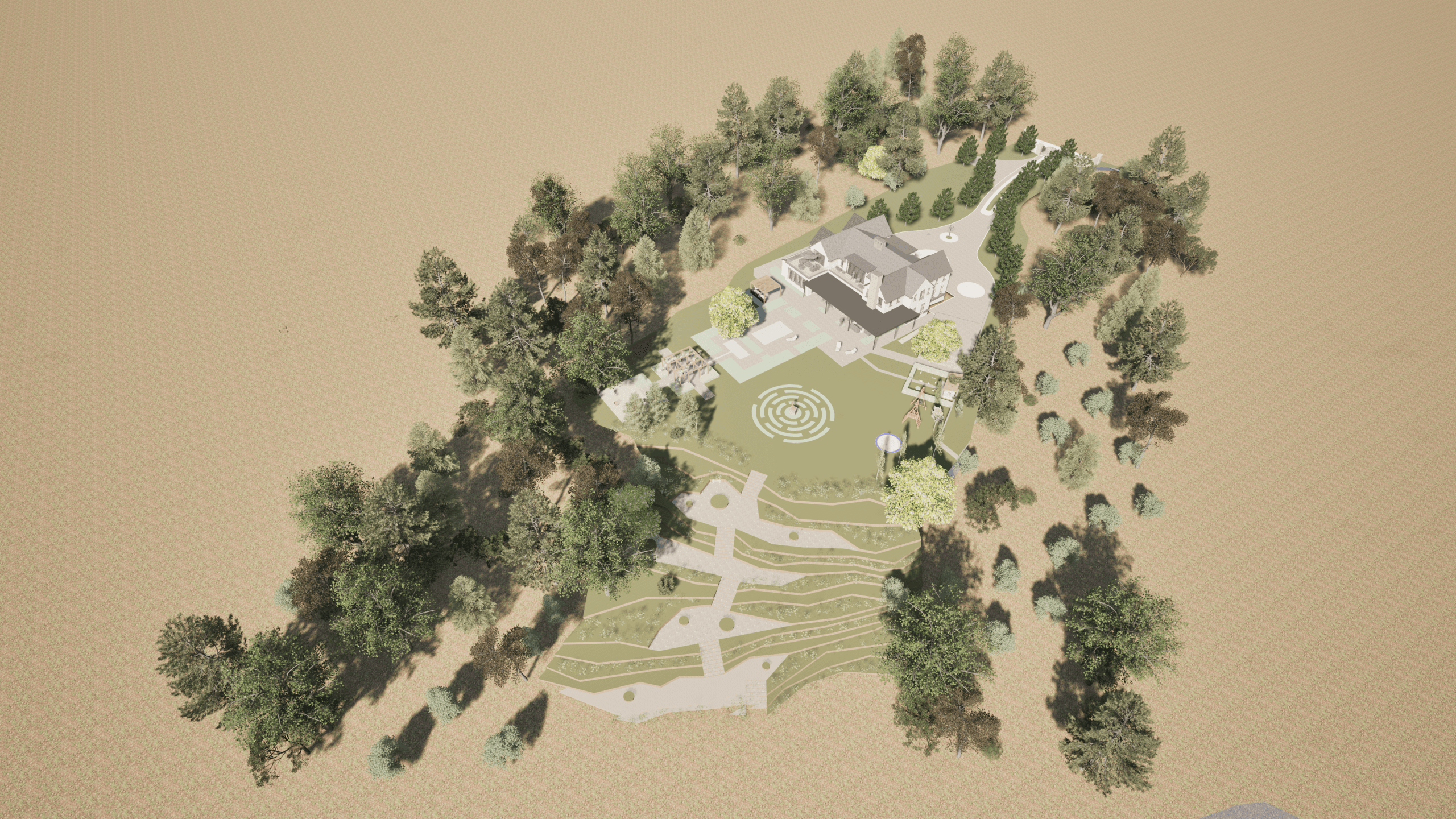
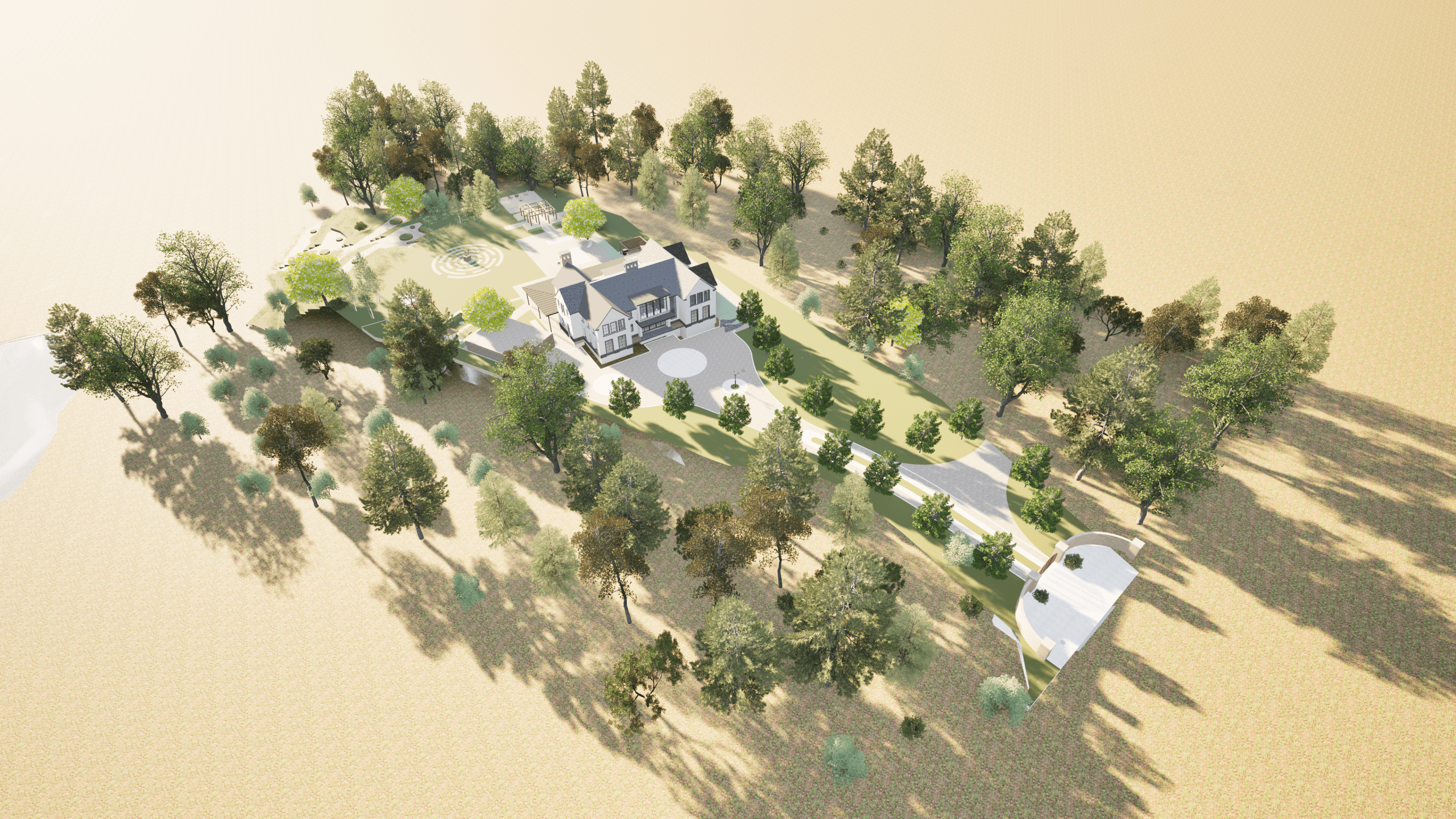
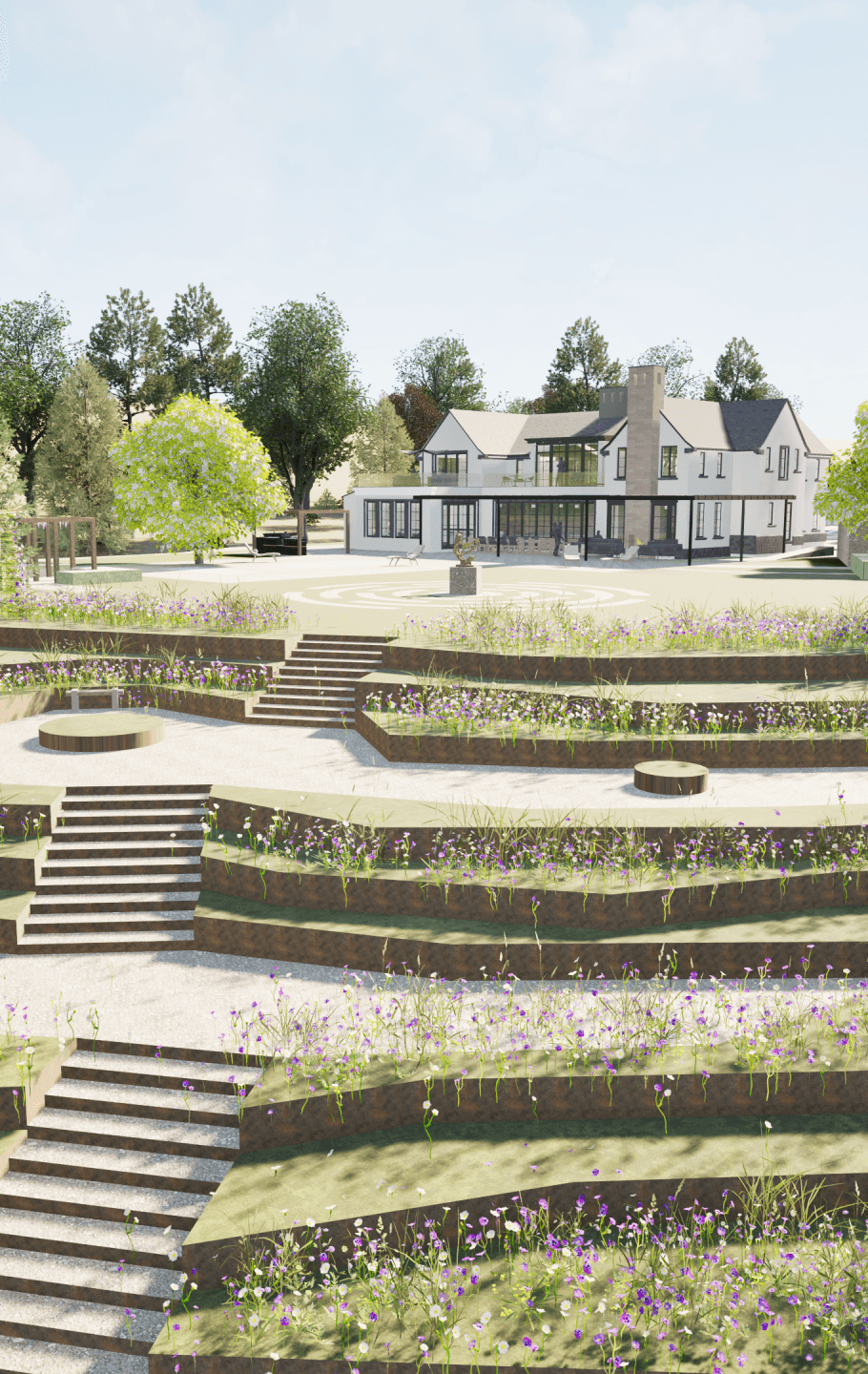
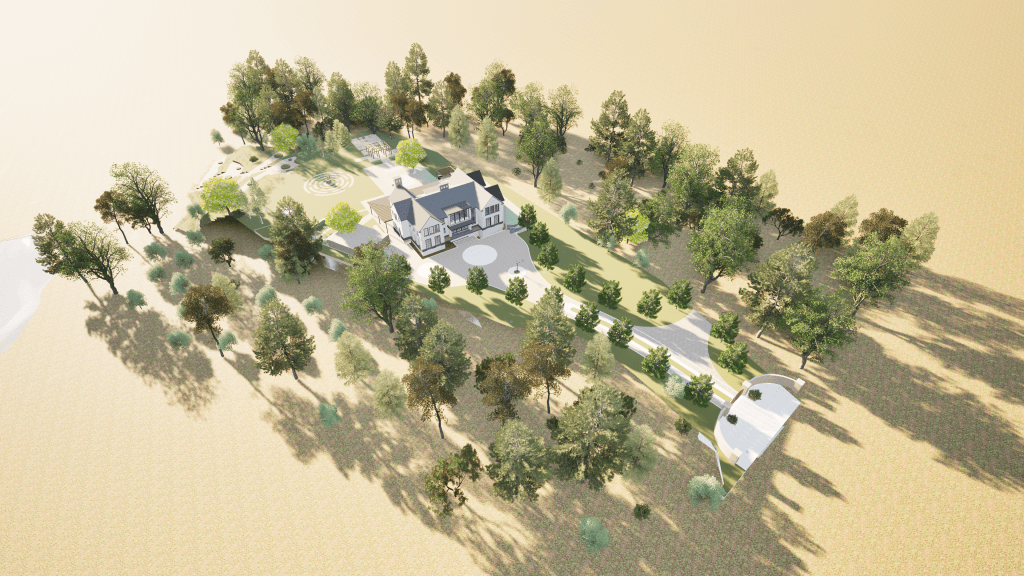
Rather than imposing a garden onto the landscape, our approach was to create a gradual transition from architecture to nature with structured spaces close to the house that soften into a woodland glade, orchard, lake and more natural family landscape beyond.
The garden close to the house uses simple geometry, natural stone and soft planting to create a calm, welcoming setting that works with the home’s contemporary architecture. Wonderful family-friendly features, including an outdoor kitchen, play area, sunken trampoline, dog-washing space and a future swimming pool, were planned from the start so they feel like part of one connected landscape.
Further from the house, the design becomes more natural, using the existing environment as inspiration. A parterre near the barn links the formal garden with the surrounding woodland, while a woodland glade provides space for play, exploration and quiet time outdoors.
The design was shaped by the site’s existing woodland, hedgerows, streams and lake, which already support a wide range of wildlife. Mature trees and habitats were kept wherever possible, and native planting helps the garden blend naturally into the woodland.
Lighting has been designed to protect wildlife, and the landscape works with the site’s slopes and sandy soil to manage rainwater and improve drainage, including plans to restore the lake.
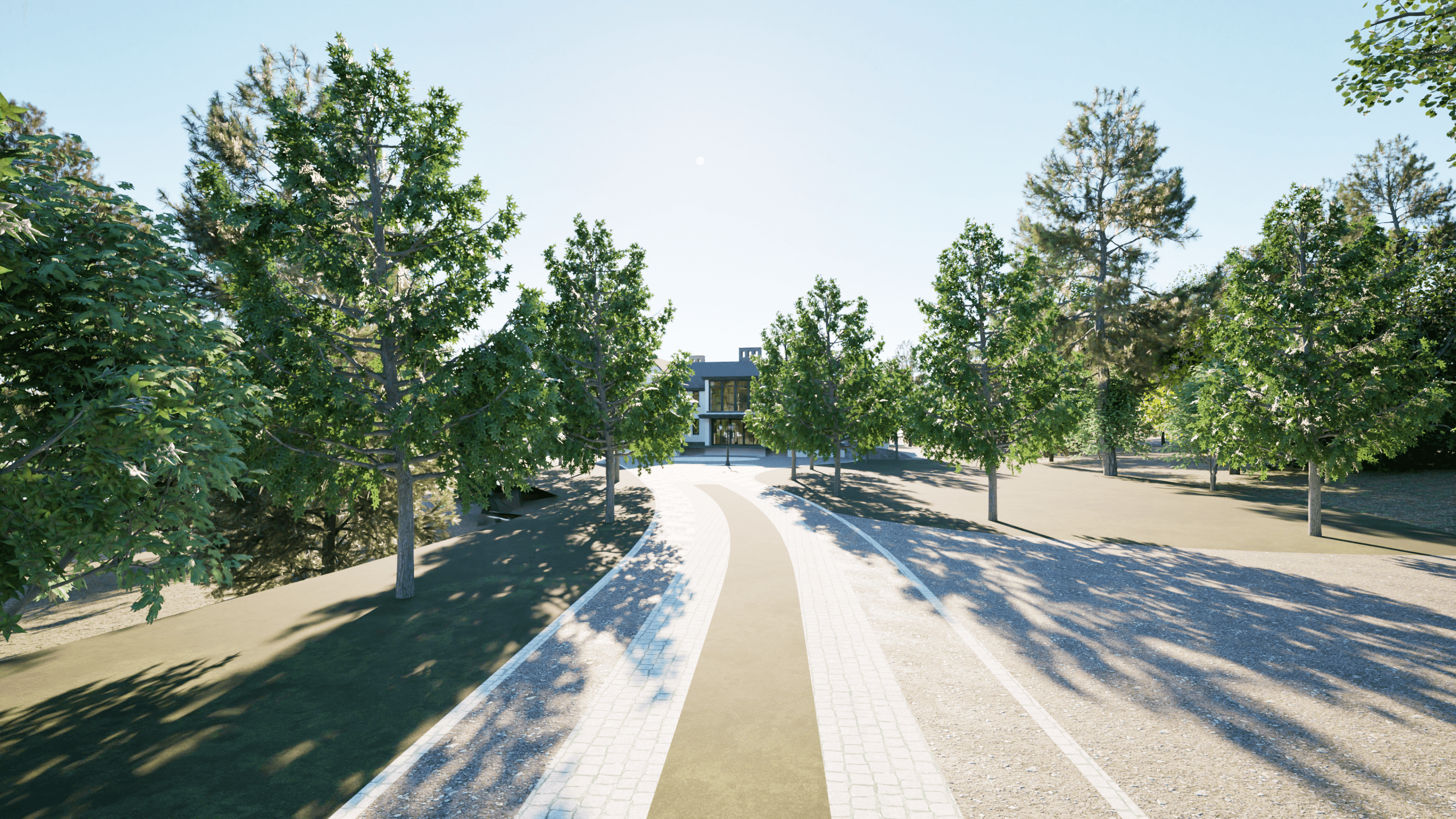
Sustainability at Oak Grange is based on making the most of what is already there. The existing driveway can be reused, reducing excavation, waste and imported materials, and the project is planned in phases so the garden can develop over time. Our designs and practices are always ecology driven so many measures were taken to ensure the design respects the environment and existing ecosystem as much as possible.
The result is a contemporary garden that supports family life while respecting the surrounding woodland, creating a landscape that will continue to grow and improve with each season.