

Every May, designers, growers, landscapers and garden enthusiasts all make their way to the RHS Chelsea Flower Show, eager to see what this year’s gardens will bring. For us, the trip has become more than simply a day out. It is an opportunity to step away from the studio, immerse ourselves in creativity, and experience first-hand the ideas shaping the future of garden and landscape design.
First held in 1913 by the Royal Horticultural Society, the Chelsea Flower Show has grown into one of the most influential events in the horticultural and design calendar. It remains a place where established designers showcase ambitious ideas, emerging talent gains recognition, and visitors experience gardens that push creative and technical boundaries. For us, it’s an endless source of inspiration and excitement.
Across gardens big and small, we noticed a few recurring design aspects – the use of layered planting with maximum ground cover, reclaiming and repurposing, striking structures and shelters, naturalistic landscapes and bold colour.
For designers, Chelsea is not simply about admiring beautiful gardens but noticing and studying detail. The relationship between hard landscaping and planting. The way colour can influence mood. The balance between restraint and abundance. It is these observations that often spark ideas not just during the train journey home, but long after the show itself has ended.
Container Gardens
An area of Chelsea which surprised me personally was the container gardens. These smaller gardens are in no way less exciting, or provide less design impact.
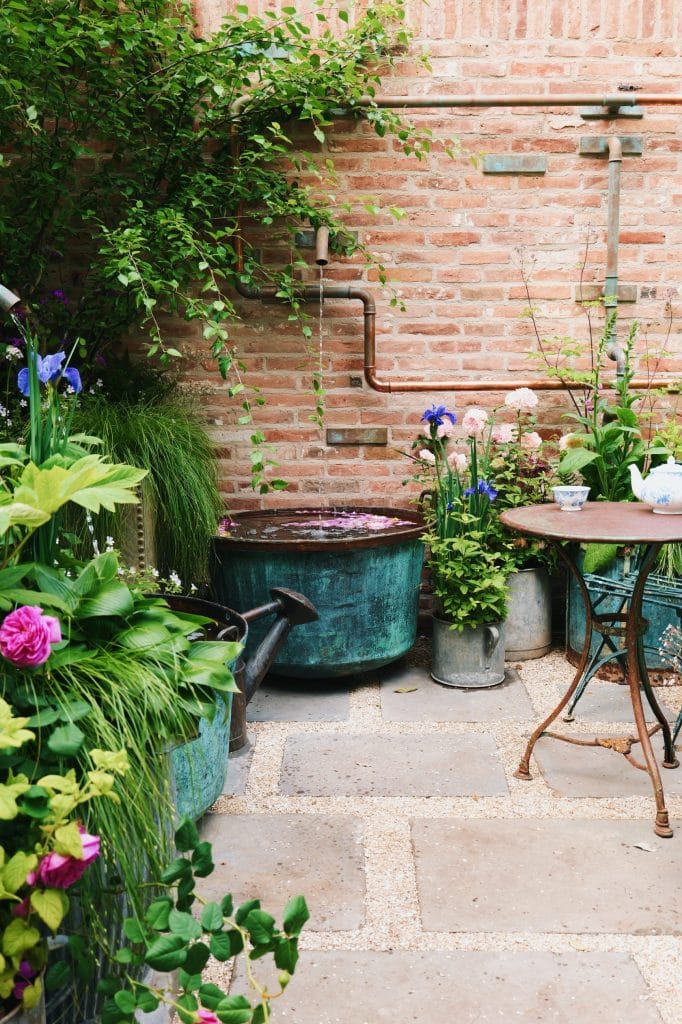
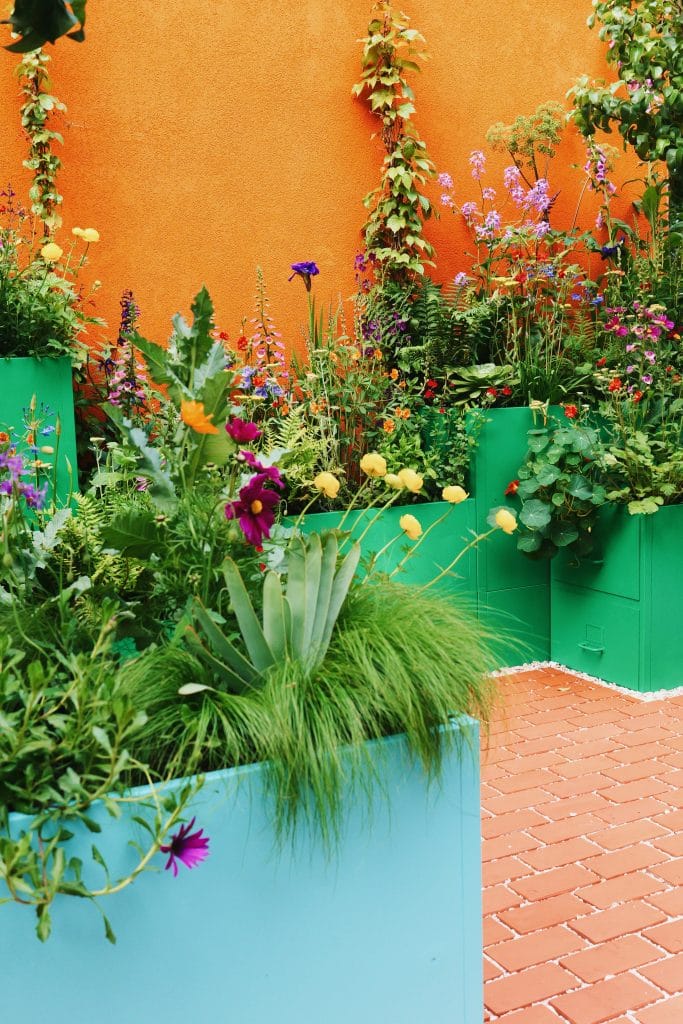
Two gardens which caught my eye in particular were The Whittard of Chelsea Garden designed by Ollie Pike (left) and The Seasalt Painted Garden designed by Lynn James (right).
Pike’s garden displays a quintessential English garden within a courtyard space showcasing an eclectic mix of reclaimed and repurposed containers and pots. Mixing soft planting with copper piping, brick and metal containers creates such a beautiful contrast. I love how the arrangement of the garden creates areas of deep shade and the materials used really highlights the stunning colours and tones the planting brings. As a lover of the cottage garden, I love this classic design with the addition of exposed copper piping for unique water features and heavy use of reclaimed items.
In heavy contrast, James’s container garden creates a striking image with vibrant colour and bold lines. I love the use of colour and the joyful planting – the varying heights really feels like it’s a connection between the hard and soft textures. The choice of colour and shapes announces it’s inspiration from mid-century modernist artists -reimagining their art in this courtyard garden design. Once again, repurposed items have been used as planting containers and I love this theme throughout the gardens at Chelsea. Although thoroughly different gardens, these two certainly grabbed my attention as I made my way around the show.
A seed in time
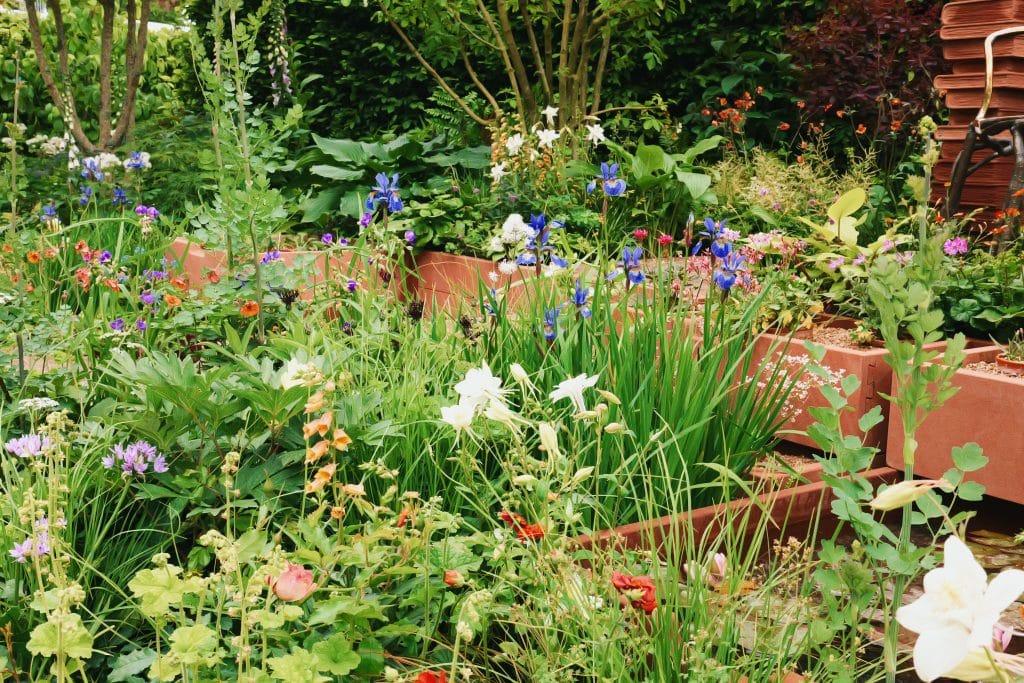
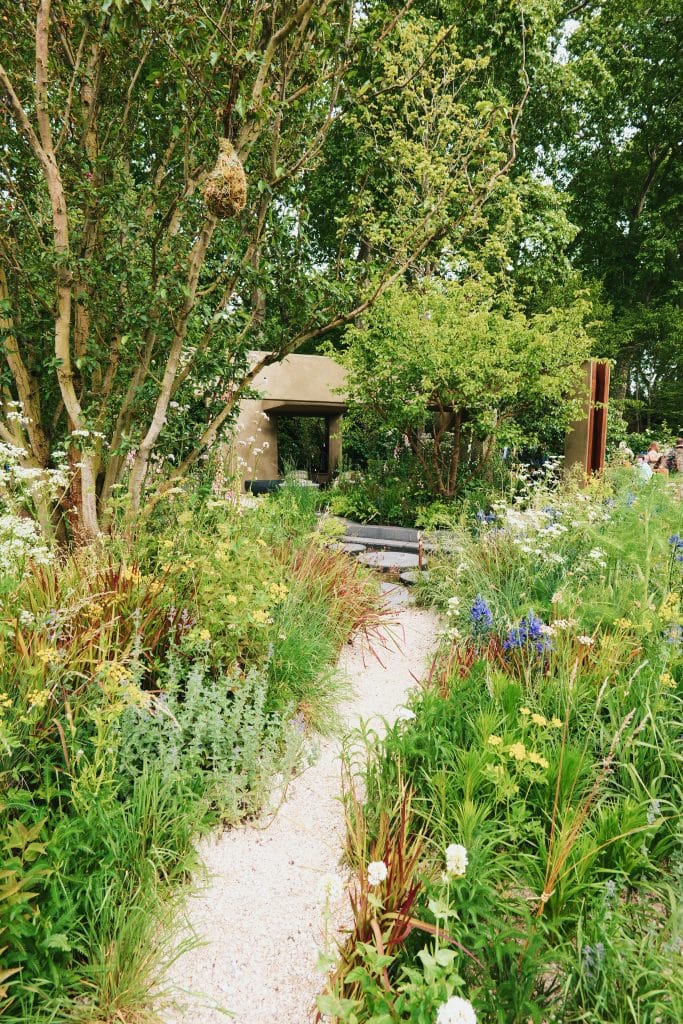
One of the gardens that particularly stood out to us was The Killik & Co ‘A Seed in Time’ Garden (below left) designed by Baz Grainger. Grainger explores the relationship between climate resilience, traditional craftsmanship and wildlife-friendly planting in his design, creating something quietly thoughtful and beautiful. The space was designed as a balanced family garden and you can really feel this as natural barriers divide the space.
At the centre of the garden there is a wetland area designed to capture and channel rainwater to create an evolving habitat. Pathways wind through the spaces and subtle level changes added a sense of a naturalistic landscape.
In my opinion, what made the garden really stand out was its layered approach to planting. Fruiting trees, self-seeding perennials and flowing grasses softened the space and every single area felt intentional.
Beyond its visual appeal, the garden carried an important message around biodiversity and climate resilience as with many of Grainger’s designs. The UK is one of the world’s most nature-depleted countries and this design highlights how even domestic gardens can contribute positively to biodiversity and support wildlife.
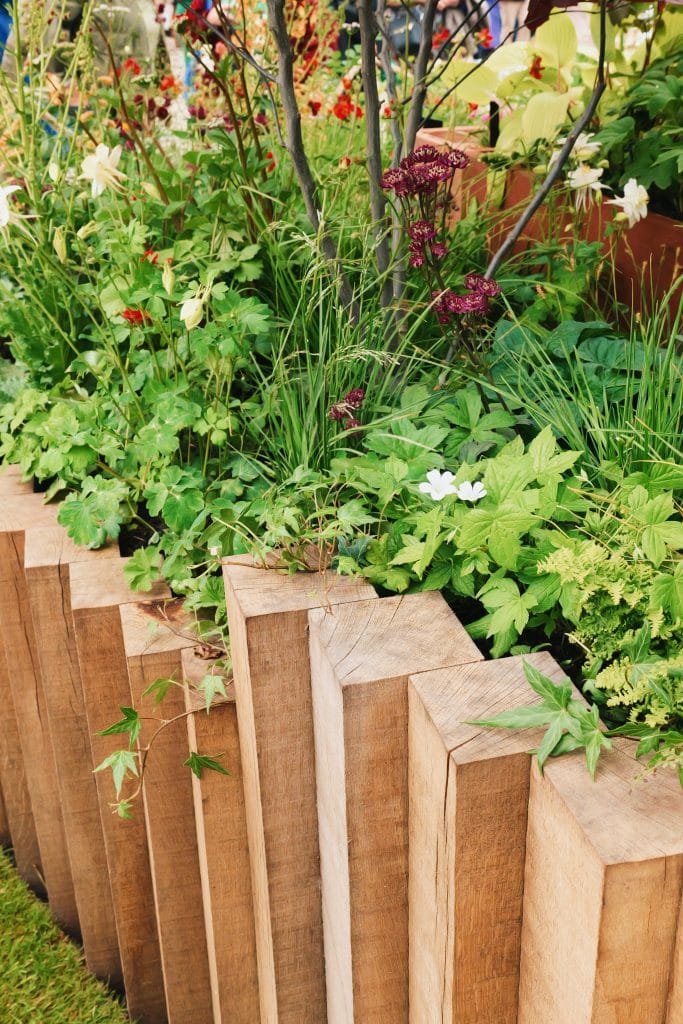
Precision and perfection
For me, this was a first visit to Chelsea Flower Show. As much as I’ve watched it on TV over the years and scrolled social media feeds, there’s truly nothing like being there in person. I was absolutely struck by the scale of the gardens and the details within them. The image top right shows the precision of the work with this wood barrier – beautifully designed, created and built. These show gardens really are works of art, not only from the designers themselves but from the craftsmen, growers and labourers who bring them from paper into reality. Seeing that level of detail and collaboration in person was incredibly inspiring and exactly how we hope to excel at our own Chelsea show garden in the not so distant future.